Roof Care
Why Your Roof Has Black Streaks (And Why Pressure Washing Makes It Worse)
5 min read · 2026-09-12
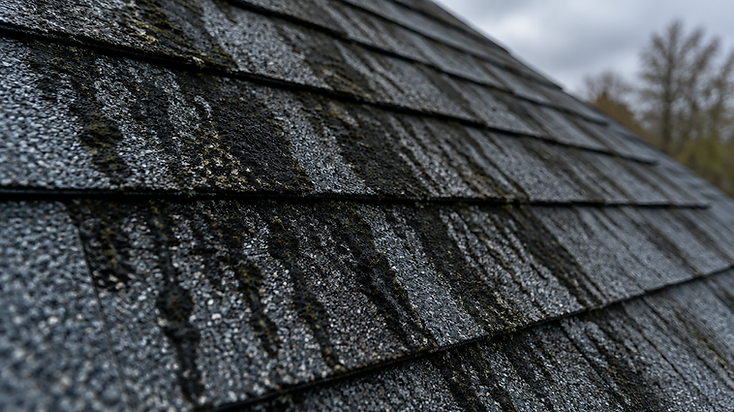
Those dark streaks aren't dirt and they aren't shading. They're algae feeding on your shingles — and the way most people try to remove them causes permanent damage.
Those dark streaks running down your roof aren't dirt, and they aren't caused by shade. They're a living colony of algae — usually Gloeocapsa magma — feeding on the limestone filler inside your asphalt shingles.
What the algae is actually doing
The streak starts as a small dark spot on a north-facing slope, then spreads downward as rain carries spores across the roof. The algae feeds on the shingle, holds moisture against the surface, and gradually degrades the granular layer that protects the asphalt underneath.
Left alone, it does three expensive things:
- Shortens the life of the roof by years
- Raises attic temperatures as the dark surface absorbs more heat
- Makes the house look older than it is, which matters at resale
Why pressure washing is the wrong tool
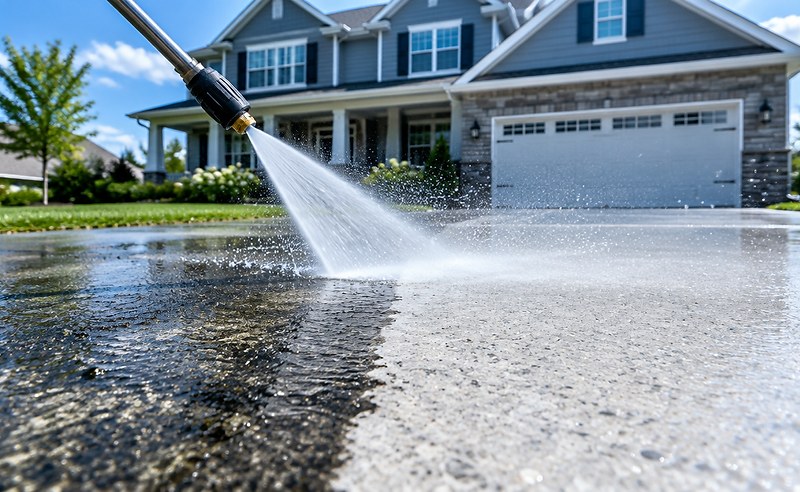
Blasting a roof strips the protective granules and forces water under the shingle edges. It can also void the manufacturer's warranty. You may see a clean roof for a few months — then the streaks return faster, because the algae's food source is now exposed and the shingle is weaker.
What soft washing does instead
A soft wash uses a low-pressure application of a cleaning solution that kills the algae at the root, then rinses the dead growth away with nothing more than garden-hose pressure. Nothing is stripped. Nothing is lifted. The shingles stay sealed.
The result: the roof returns to its original color and stays that way for years instead of months.
If your roof looks like a patchwork of black and grey, that's the point to call a specialist — before the algae becomes a replacement conversation instead of a cleaning one.