Driveways & Concrete
Driveway Stains 101: What Comes Out, What Fades, and What Stays
6 min read · 2026-08-28

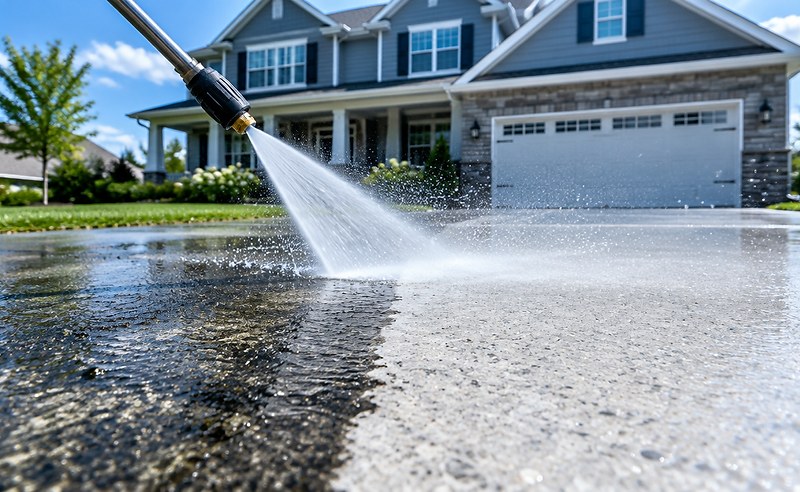
Not every stain on your driveway behaves the same way. Here's an honest breakdown of what professional cleaning can remove, what it can only lighten, and what no one can fix.
A driveway is the most abused surface on a property, and the stains on it come from very different sources. Knowing which is which tells you what to expect from a professional cleaning — before you pay for one.
Comes out completely
- Algae, mold and mildew — the black and green film that builds in shaded areas
- Dirt, silt and pollen buildup — especially on slopes where runoff collects
- Rust from sprinkler overspray — treatable with a dedicated rust remover
- Tannin stains from leaves left sitting through winter
- Tire marks on concrete and pavers
Comes out mostly
- Fresh oil spots — usually gone with degreaser and hot water
- Older oil — the surface improves dramatically, but deeply soaked concrete can hold a faint shadow
- Paint and caulk drips — often removable, sometimes only with mechanical work
Usually permanent
- Acid damage from fertilizer or pool chemicals left too long
- Rust pitting where metal has been staining for years
- Scoring and gouges from snowplows, trailers or heavy equipment
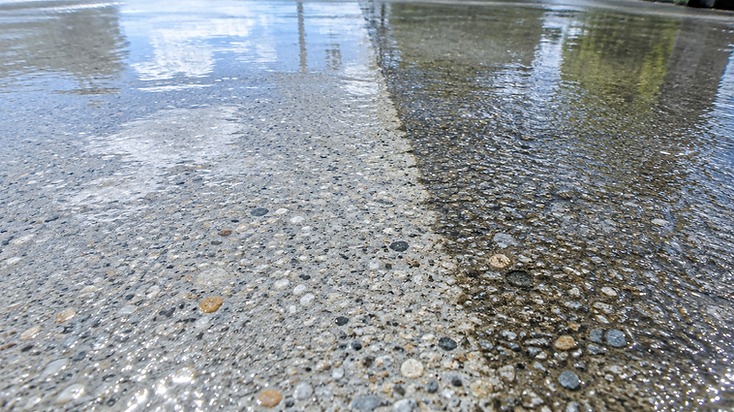
No honest cleaner can promise a 20-year-old oil stain will vanish. What we can promise is an even, streak-free surface where the stains that do remain are the only thing your eye notices — instead of a grey, grimy slab.
The one thing that keeps it clean
Cleaning isn't the last step — sealing is. A penetrating sealer on concrete or a re-sand on pavers slows everything above from taking hold in the first place, which stretches years between cleanings.